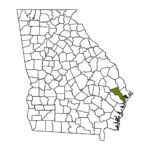
They Had Names is an award-winning digital humanities project dedicated to uncovering, preserving, and sharing the lives of enslaved, formerly enslaved people and free people of color in coastal Georgia Liberty and Bryan Counties.
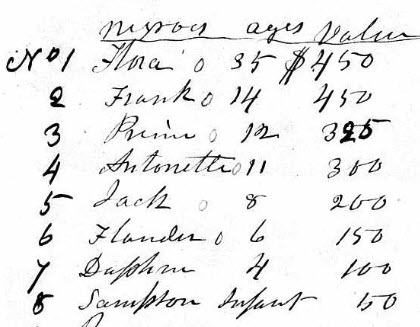
Find an ancestor during slavery in more than 40,000 names of enslaved people during the period 1768-1865 contained in 3800+ searchable abstracts, transcripts and lists of wills, estate inventories, and deed records, plus church, court and other records.
Follow an ancestor into freedom in transcripts and lists of voter registrations, Southern Claims Commissions petitions, labor contracts, land sales, mortgages, marriages, divorces, homestead exemptions, Freedmen’s bureau records and tax records.
Whether you’re a descendant searching for family connections or other kind of researcher studying Liberty County, They Had Names provides the tools to piece together lives that might otherwise remain hidden. Every name tells a story, and every person deserves to be remembered as an individual, not as property.
What if you are not researching Liberty County? Use this site as an example of what kinds of records you might find in your own county of interest.
Everything on this site is free and always will be. Ready to start? Continue below to find out more about the various record types. If you have questions about using the website, you can email me at stacy @ theyhadnames.net.
Flanders Pray became one of the first African American school teachers in Liberty County after the Civil War.
"I was for my freedom all the time. I did not care how it came. I prayed for it to come and waited for it a long time. It came and I am not tired of it and I don't think I ever shall be." Jack Wilson, Halifax Plantation, Liberty County, July 1873
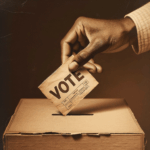
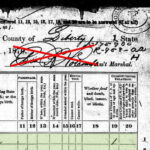
A legal, interracial marriage in 1828, Liberty County enslaved people sent to Liberia, the forged 1870 census, the courage of Black voters in 1868, and more.
Find research here about particular individuals from Liberty and Bryan Counties — enslaved and free African Americans and their enslavers. The enslavers’ stories are told to help descendants of the enslaved and to tell the whole story of the past.
"I was so glad to be set free it seemed to me what little time I had been free was a long time." Lafayette Delegal, "Mrs. Dunwody Jones place," Liberty County, July 1873
"They [Sherman's Army] left us in a very bad condition. I was willing to give all for my freedom. I would not go back into slavery for twice the amount of any amount. I value freedom too much to sell it for anything or any price." Billy Gilmore, Riceboro, Liberty County, October 1873
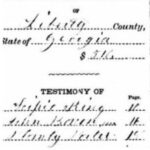
Many of the Liberty County residents who filed U.S. Southern Claims Commission petitions after the Civil War were freedpeople. See almost 90 full transcriptions here.
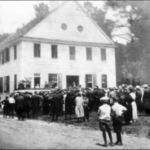
In antebellum Liberty County, African Americans, enslaved and free, attended white churches, and those churches left records. Find lists of these church members.
Bryan County probate records seem to have disappeared, but the deed records remain, and thousands of enslaved people are named in them. Bryan County neighbored Liberty County and the boundaries were fluid. Search Bryan County records here.
Humanitarian Award from the Liberty County Martin Luther King Jr. Observance Association, Inc (2025)
Award for Excellence in Documenting Georgia’s History by the Georgia Historic Records Advisory Council (GHRAC) (2023)
The Paul Edward Sluby, Sr./Jean Sampson-Scott Meritorious Achievement Award from the Afro-American Historical and Genealogical Society (AAHGS) (2022)
Susie King Taylor Mami Wata Rising Award for Genealogy Research (2019)
PUBLICATIONS
They Had Names: Representations of the Enslaved in Liberty County, Georgia, Estate Inventories, 1762-1865, Journal of Slavery and Data Preservation, Vol. 1, Issue 2 (Enslaved.org)
“Abram Houston: Bridging the Gap from the 1870 Census to Slavery — A Liberty County, Georgia, Case Study Illustrating the Benefits of a Community-Focused Approach to Slavery Documentation.”, The Georgia Genealogical Society Quarterly, Vol. 57, No. 1
“Where Did My Surname Come From?: Researching the Slaveowner James James of Liberty County, Georgia,” The Georgia Genealogical Society Quarterly, Vol. 57, No. 3-4
about this site
Everything on this site was created by two people: Stacy Ashmore Cole, descendant of an enslaver family of Liberty County, and Cathy Tarpley Dillon, dedicated volunteer transcriber. If you’d like to learn more about what started this site, click here.
Content Warning
Slavery was an evil institution. Nothing on this site is intended to suggest otherwise or support any narratives of “good slaveowners.”
Reading and transcribing old handwriting is hard work and there must certainly be mistakes on these pages. The original documents are always cited and are online; please consult them before you draw any conclusions.
These are historical documents and the original wording used is often extremely offensive. Original wording is indicated with quotation marks.